
The best record collection is the one you actually listen to
That sentence is the whole philosophy. Not the rarest collection, not the most expensive, not the most Instagram-worthy wall of spines — the one you put on, sit down with, and hear. If you keep that principle, everything else follows naturally and you will spend far less money than the internet will try to convince you to spend.
Start free
Before you buy a single record, do three things:
Ask around. Your parents, your uncle, your neighbor who's downsizing — someone in your life has records they're not playing. People give these away gladly. You are doing them a favor by taking them. Don't be precious about genres yet. The jazz record you didn't ask for might become the one you listen to most.
Check estate sales and thrift stores. Records at estate sales typically cost $1-3 each. Thrift stores price them between $0.50 and $2. The condition varies, but at these prices you can afford to experiment. You are not looking for mint-condition first pressings. You are looking for music you might love.
Visit your local library. Many libraries lend vinyl records. Some have surprisingly deep collections. This costs nothing and lets you listen before you commit to owning.
What you actually need to play them
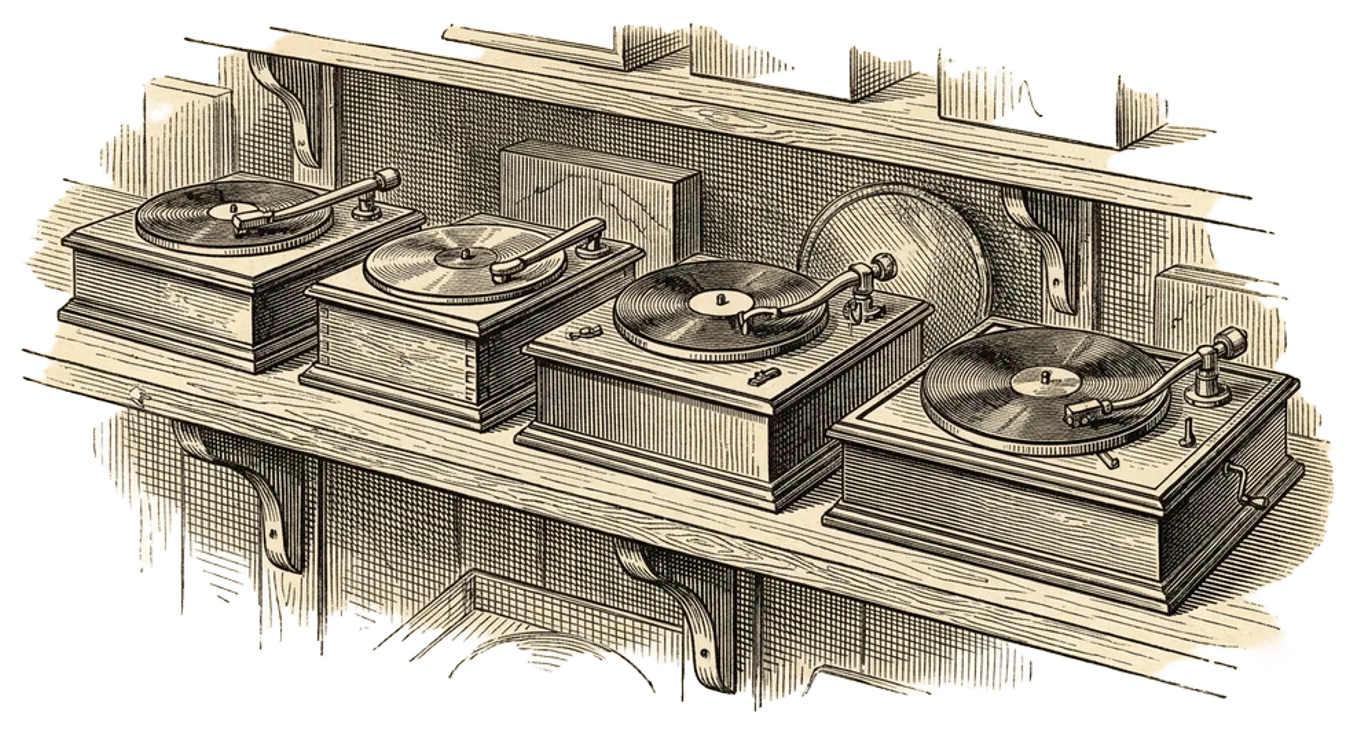
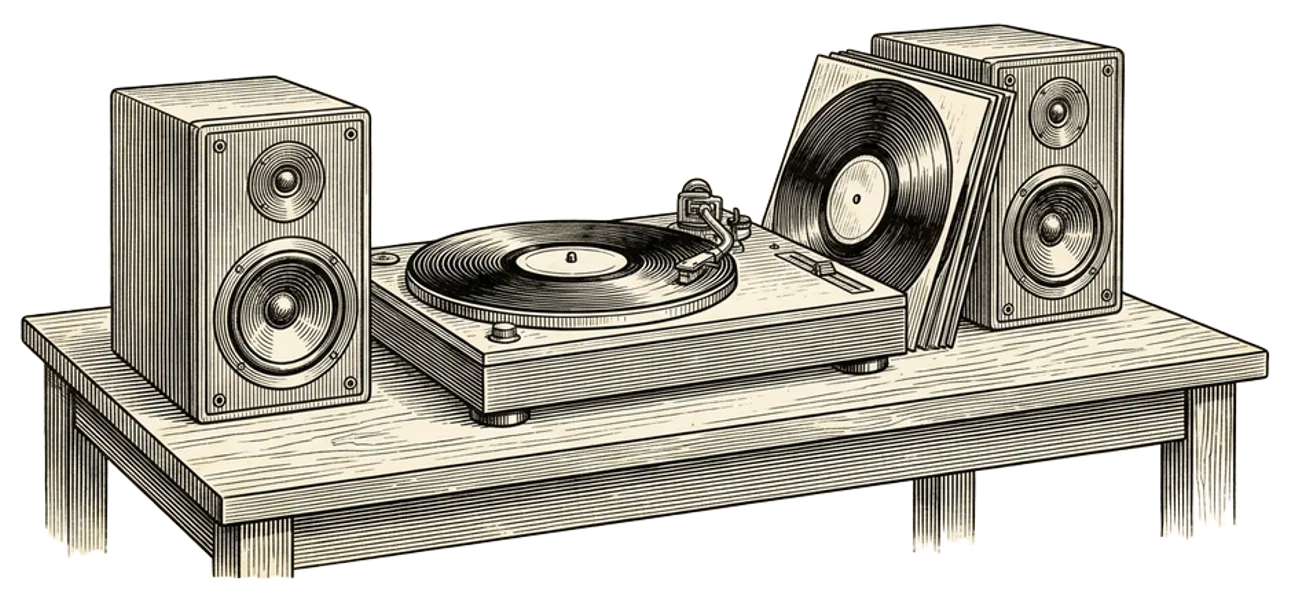
A turntable, a way to amplify the sound, and speakers. That's it. Let's keep this as simple as possible.
Turntable: Audio-Technica AT-LP60X. Around $150 from Crutchfield. This is our one specific hardware recommendation for beginners, and we make it deliberately. It's fully automatic (you press a button, the arm moves itself), it won't damage your records, it has a built-in phono preamp so you can connect it directly to powered speakers, and it sounds genuinely good for the money. It is not the fanciest turntable. It is the right turntable to find out if you love this hobby before spending more.
Disclosure: we have an affiliate relationship with Crutchfield. If you buy through our link, we earn a small commission at no extra cost to you. We recommend Crutchfield because they have exceptional customer support, fair return policies, and genuinely helpful product guides — not because of the commission.
Speakers: powered bookshelf speakers. You need speakers with a built-in amplifier (called "powered" or "active" speakers). The Edifier R1280T is a common recommendation around $100. But honestly, any powered bookshelf speakers you can find used will work. Check Facebook Marketplace, Craigslist, or your local thrift store first. Used speakers for $30-50 sound perfectly fine for starting out.
Placement: Speakers at ear level, at least a few feet apart, angled slightly inward toward your listening position. The turntable on a stable, level surface. Away from the speakers (vibrations travel). That's the whole setup guide.
What you don't need
- A $500+ turntable. Not yet. Maybe not ever. The AT-LP60X or its equivalents are genuinely good enough for years of happy listening.
- A receiver/amplifier. Not if you're using powered speakers. Skip the stack of silver components until you know you want them.
- A record cleaning machine. A carbon fiber brush ($15) and careful handling is enough to start. Deep cleaning matters for serious collectors; you are not a serious collector yet.
- Special inner sleeves. Nice to have eventually. Not necessary today.
- A Discogs account to track value. You are building a listening collection, not a financial portfolio. If you find yourself checking what your records are "worth," you have drifted from the purpose.
- New vinyl from the latest pressing. New records cost $25-40 each. Used records from a thrift store cost $1-3. At the beginning, volume of discovery matters more than pressing quality.
How to choose what to buy
At the thrift store or estate sale, pull out anything where you recognize the artist, or where the cover art makes you curious, or where the genre interests you. Don't research. Don't check reviews. At $1-2 per record, the stakes are low enough to just take it home and listen.
Over time, you will notice patterns in what you return to. That's your taste forming. Follow it. Let it surprise you.
The only rule
Listen to what you buy. Not as background noise while you cook — though that's fine too — but as the primary activity at least sometimes. Sit down. Put the needle on. Listen to a whole side without getting up. That's twenty minutes of your life, and it's the entire reason any of this matters.
If you're not doing that, you don't have a record collection. You have a shelf decoration. And a shelf decoration is fine, but it doesn't need a buying guide.